

With a portfolio spanning 75 distinguished maisons and annual revenues exceeding €80 billion, LVMH Moët Hennessy Louis Vuitton SE stands as the undisputed titan of the global luxury industry. From the storied leather workshops of Louis Vuitton to the sparkling showcases of Tiffany & Co., the Paris-based conglomerate controls roughly a quarter of the entire personal luxury goods market.
But what exactly does LVMH own? How did a single company come to house centuries-old champagne houses alongside cutting-edge fashion labels? This guide maps the full LVMH brand universe — organized by business division, contextualized by strategy, and updated for 2026.

Table of Contents
- 1. The Origins of LVMH: How a Luxury Empire Was Built
- 2. Understanding the LVMH Business Model
- 3. Fashion & Leather Goods: The Crown Jewels
- 4. Wines & Spirits: Where It All Began
- 5. Perfumes & Cosmetics: Bottling Desire
- 6. Watches & Jewelry: From Ateliers to Red Carpets
- 7. Selective Retailing: Controlling the Customer Experience
- 8. Other Activities: Hospitality, Media, and Beyond
- 9. LVMH vs. Kering vs. Richemont
- 10. Portfolio Strategy in 2026: What LVMH Is Buying and Selling
- 11. What Makes LVMH Different: Key Takeaways
- 12. Frequently Asked Questions
The Origins of LVMH: How a Luxury Empire Was Built
The story of LVMH begins with a 1987 merger between two French icons: Moët Hennessy (itself a 1971 union of the champagne house Moët & Chandon and cognac producer Hennessy) and the fashion house Louis Vuitton. The combined entity instantly became the world’s largest luxury goods company.
Bernard Arnault, a French businessman with a background in real estate, seized control of the group in 1989 through a series of strategic investments. Under his leadership, LVMH evolved from a Franco-centric luxury house into a global acquisition machine, systematically adding heritage brands across every conceivable luxury category — fashion, jewelry, watches, perfumes, wines, spirits, hospitality, and retail.
Today, LVMH employs over 213,000 people across more than 70 countries, and its market capitalization routinely places it among the most valuable companies in Europe.
Understanding the LVMH Business Model
What distinguishes LVMH from other conglomerates is its “maison autonomy” philosophy. Each brand — or maison, as LVMH calls them — retains its own creative director, identity, heritage narrative, and operational independence. The parent company provides centralized support in manufacturing infrastructure, global distribution, real estate, and financial resources, but creative decisions remain firmly in the hands of each house.
This decentralized model allows LVMH to operate brands that compete with one another. Louis Vuitton and Dior, for instance, both sell leather handbags at premium price points, yet each maintains a distinct aesthetic universe. The internal competition, Arnault has argued, keeps each maison sharp and culturally relevant.
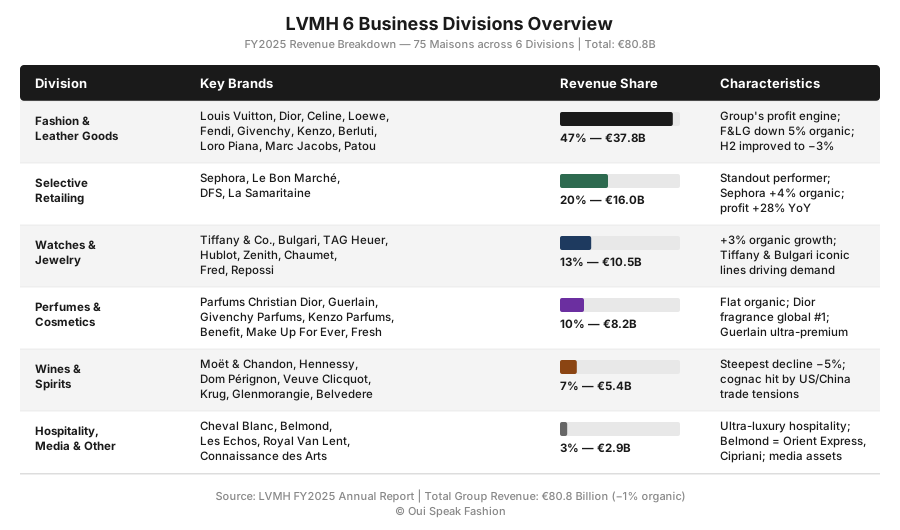
LVMH organizes its 75 brands into six operational divisions, each serving a different dimension of the luxury lifestyle.
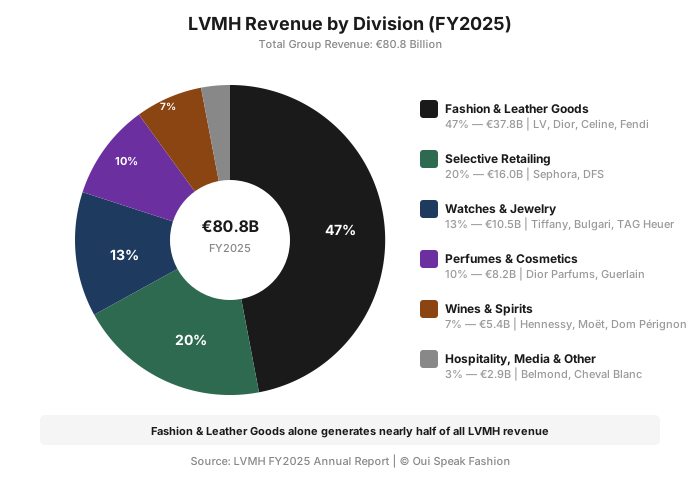
Fashion & Leather Goods: The Crown Jewels
This division is the financial engine of LVMH, consistently generating the highest revenue and margins. It houses some of the most recognizable names in global fashion.
Louis Vuitton — Founded in 1854 as a trunk-maker in Paris, Louis Vuitton is not only LVMH’s flagship brand but also the most valuable luxury brand in the world. Under the creative direction of Pharrell Williams (menswear) and Nicolas Ghesquière (womenswear), the house continues to push the boundaries between heritage craftsmanship and contemporary culture. Vuitton alone is estimated to generate over €20 billion in annual revenue.
Christian Dior — The house founded by Christian Dior in 1946 revolutionized postwar fashion with the “New Look.” In 2025, Jonathan Anderson — formerly of Loewe — was appointed creative director for womenswear, menswear, and haute couture, unifying all collections under a single creative vision for the first time in years. Anderson’s Spring/Summer 2026 debut signaled a new era of conceptual ambition for the house. LVMH acquired full ownership of Christian Dior Couture in 2017 for €6.5 billion.
Celine — Once a children’s shoe brand, Celine was transformed under the creative direction of Phoebe Philo into a symbol of intellectual minimalism. Under current creative director Michael Rider, the house continues to evolve, blending Parisian sophistication with a quieter, more personal aesthetic. The brand has seen substantial revenue growth in recent years.
Loewe — This Spanish house, founded in 1846, experienced a dramatic resurgence during Jonathan Anderson’s 11-year tenure as creative director (2014–2025). Following Anderson’s departure to Dior, Loewe appointed Jack McCollough and Lazaro Hernandez — the duo behind Proenza Schouler — as its new creative directors in March 2025. The house continues to be one of the fastest-growing brands in the LVMH portfolio.
Fendi —Founded in Rome in 1925, the maison is renowned for its expertise in fur craftsmanship and the iconic Baguette bag. Following the departure of Kim Jones in 2024, Maria Grazia Chiuri, formerly at the helm of Dior womenswear, was appointed Chief Creative Officer and unveiled her first Fendi womenswear collection for Fall/Winter 2026. Meanwhile, Silvia Venturini Fendi, a member of the founding family who had long shaped the maison’s creative identity, stepped down from her role as Creative Director in 2025 and now remains involved with the brand as Honorary President.
Givenchy — Founded in 1952 by Hubert de Givenchy, the house is synonymous with Audrey Hepburn’s timeless elegance. Sarah Burton, formerly of Alexander McQueen, now helms the creative direction, bringing a new chapter of emotional, craft-driven design.
Kenzo — Founded in 1970 by Japanese designer Kenzo Takada, the house has long been a bridge between Eastern and Western fashion sensibilities. Currently led by creative director Nigo, Kenzo blends streetwear influences with its founder’s joyful, pattern-rich DNA.
Loro Piana — Acquired by LVMH in 2013 for €2 billion, this Italian house is the world’s foremost purveyor of ultra-luxury textiles — from vicuña and cashmere to the finest wools. Loro Piana caters to the “quiet luxury” customer who values material quality above visible branding.
Marc Jacobs — The American designer’s eponymous brand is known for its downtown New York energy and pop-culture collaborations. Reports suggest LVMH may be exploring strategic options for the brand as part of a broader portfolio refocusing.
Berluti — A Parisian shoemaker since 1895, Berluti has expanded into full menswear collections while maintaining its reputation for the finest patinated leather shoes in the world.
RIMOWA — The German luggage manufacturer, acquired in 2016, is known for its signature grooved aluminum suitcases. Under LVMH, RIMOWA has successfully repositioned itself as a luxury lifestyle brand through high-profile collaborations.
Patou — The historic French fashion house, revived under LVMH, offers accessible luxury with a focus on sustainability and modern femininity.
Emilio Pucci — The Florentine house known for its bold prints and resort wear continues to serve as a colorful counterpoint within the LVMH fashion portfolio.
Wines & Spirits: Where It All Began
The wines and spirits division traces directly back to the 1971 merger that created Moët Hennessy — the very foundation upon which LVMH was built. This division houses some of the most prestigious names in the drinks world.
Moët & Chandon — Established in 1743 in Épernay, this is the world’s best-selling champagne brand. Its Impérial Brut is the defining image of celebration worldwide.
Dom Pérignon — The prestige cuvée of Moët & Chandon, Dom Pérignon is produced only in exceptional vintage years, making it one of the most coveted champagnes on the planet.
Veuve Clicquot — Founded in 1772, Veuve Clicquot is known for its distinctive yellow label and its historic role in pioneering the riddling technique that produces clear champagne.
Krug — Perhaps the most revered champagne house among connoisseurs, Krug is known for its multi-vintage Grande Cuvée and its emphasis on individual plot vinification.
Hennessy — Founded in 1765, Hennessy is the world’s leading cognac producer, with particularly strong market positions in the United States and China. The brand accounts for a significant share of the global cognac market.
Ruinart — The oldest established champagne house, founded in 1729, Ruinart positions itself at the intersection of wine culture and contemporary art.
Additional brands in this division include Château d’Yquem (the legendary Sauternes estate), Glenmorangie and Ardbeg (Scotch whisky), Belvedere (vodka), Volcán de mi Tierra (tequila), and Château Cheval Blanc (Saint-Émilion wine).
Perfumes & Cosmetics: Bottling Desire
LVMH’s fragrance and beauty division extends the emotional universe of its fashion houses into scent and cosmetics.
Parfums Christian Dior — Home to iconic fragrances like J’adore, Sauvage (one of the best-selling men’s fragrances globally), and Miss Dior. The division also encompasses Dior Beauty, a rapidly growing prestige makeup line.
Guerlain — Founded in 1828, Guerlain is the oldest perfume house in the LVMH portfolio. Its legacy includes legendary scents like Shalimar and L’Heure Bleue, alongside a high-end skincare line anchored in bee-derived ingredients.
Givenchy Parfums — The fragrance arm of the house of Givenchy, known for L’Interdit and Gentleman.
Benefit Cosmetics — A San Francisco-born beauty brand known for its playful packaging, brow products, and accessible positioning within the prestige beauty market.
Make Up For Ever — A professional-grade makeup brand favored by artists and performers for its high-pigment, long-wearing formulations.
Fresh — A Boston-born skincare brand that combines natural ingredients with sophisticated formulations, known for its Sugar lip treatments and soy face cleansers.
Acqua di Parma — An Italian fragrance and lifestyle brand that embodies the elegance of la dolce vita, known for its Colonia line and refined home fragrances.
Maison Francis Kurkdjian — Acquired in 2021, this niche perfumery house founded by master perfumer Francis Kurkdjian has seen explosive growth, with its Baccarat Rouge 540 becoming one of the most viral luxury fragrances of the decade.
Watches & Jewelry: From Ateliers to Red Carpets
LVMH’s hard luxury division has been significantly strengthened through strategic acquisitions, most notably the landmark $15.8 billion purchase of Tiffany & Co. in 2021.
Tiffany & Co. — The iconic American jeweler, founded in 1837, is synonymous with its robin’s-egg blue box and engagement rings. Under LVMH ownership, Tiffany has undergone a dramatic transformation — repositioning toward a younger, more culturally connected customer through collaborations and revamped retail experiences.
Bulgari — The Roman jeweler, known for its bold use of colored gemstones and its Serpenti collection, operates across jewelry, watches, accessories, and a growing chain of luxury hotels.
TAG Heuer — A Swiss watchmaker since 1860, TAG Heuer is positioned as the accessible entry point to luxury Swiss horology, with strong ties to motorsport, particularly Formula 1.
Hublot — Known for its “Art of Fusion” philosophy, Hublot combines unconventional materials (ceramic, sapphire, carbon fiber) with bold design. Its Big Bang collection is instantly recognizable.
Zenith — Founded in 1865, Zenith is celebrated among watch enthusiasts for its El Primero movement, one of the first automatic chronograph calibers ever produced.
Chaumet — A Parisian jeweler dating back to 1780 with deep ties to French nobility, known for its tiaras and bridal jewelry.
Fred — A Parisian jewelry house known for its Force 10 bracelet and modern, playful approach to fine jewelry.
Selective Retailing: Controlling the Customer Experience
This division places LVMH directly in the retail ecosystem, giving the group control over how luxury products reach consumers.
Sephora — Perhaps the most transformative brand in the LVMH portfolio beyond fashion, Sephora has redefined global beauty retail. With over 2,700 stores across 35 countries, the retailer pioneered the open-sell concept in prestige beauty and has built a formidable digital and loyalty platform.
Le Bon Marché — The world’s oldest department store, located on the Left Bank of Paris, Le Bon Marché operates as a curated luxury concept store rather than a traditional department store.
DFS Group — A travel retail operator with duty-free stores in major airports and downtown galleria locations. LVMH recently signed an agreement to transfer DFS’s Greater China operations to China Tourism Group Duty Free.
La Samaritaine — The iconic Parisian department store on the banks of the Seine, reopened in 2021 after a 16-year closure and a €750 million renovation by the architectural firm SANAA.
Other Activities: Hospitality, Media, and Beyond
LVMH’s sixth division encompasses ventures that extend the luxury lifestyle beyond products and into experiences.
Belmond — Acquired in 2019, Belmond operates a collection of ultra-luxury hotels, trains, and river cruises, including the legendary Orient Express, Hotel Cipriani in Venice, and Machu Picchu’s Belmond Sanctuary Lodge.
Cheval Blanc — LVMH’s own luxury hotel brand, with properties in Courchevel, the Maldives, Paris, and Saint-Tropez. The Cheval Blanc Paris, housed in the La Samaritaine building, has quickly established itself as one of the city’s most prestigious addresses.
Les Echos and Le Parisien — LVMH owns two major French publications: Les Echos (a leading financial newspaper) and Le Parisien (a popular daily). These media assets give the group influence beyond the commercial sphere.
Royal Van Lent (Feadship) — LVMH holds a stake in the Dutch superyacht builder, connecting the group to the world of ultra-high-net-worth maritime luxury.
LVMH vs. Kering vs. Richemont: How the Luxury Giants Compare
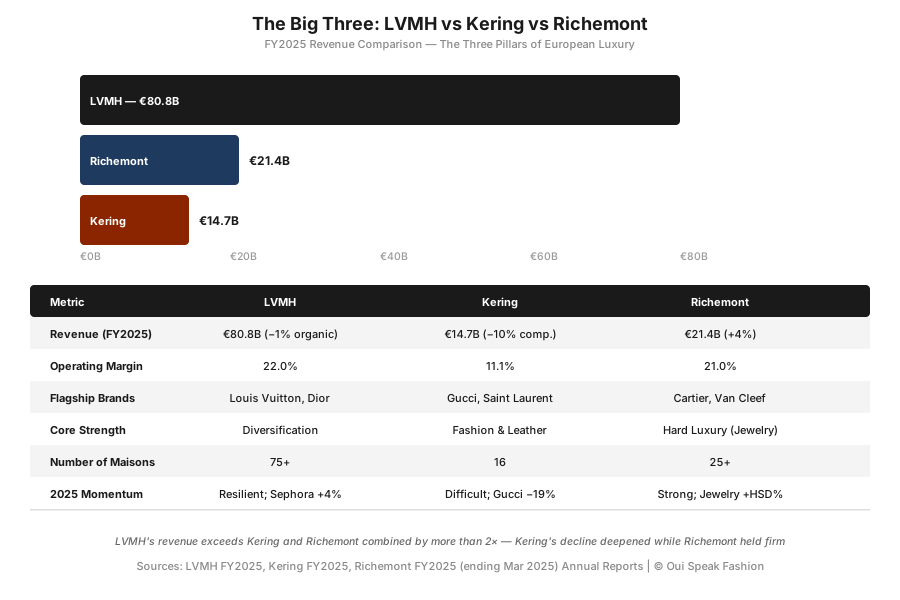
To understand LVMH’s dominance, it helps to see where it stands relative to its two closest rivals.
Kering, led by François-Henri Pinault, is built around Gucci, Saint Laurent, Bottega Veneta, Balenciaga, and Alexander McQueen. Kering is more concentrated in fashion and leather goods, making it more vulnerable to shifts in taste at any single brand — particularly Gucci, which accounts for a disproportionate share of group profits.
Richemont, chaired by Johann Rupert, excels in hard luxury through its ownership of Cartier, Van Cleef & Arpels, IWC, Jaeger-LeCoultre, and Montblanc. Richemont also owns the luxury e-commerce platform YOOX Net-a-Porter (now Mytheresa following a 2024 merger). However, Richemont lacks a comparable fashion portfolio.
LVMH’s key advantage is diversification. While Kering relies heavily on fashion and Richemont on jewelry and watches, LVMH generates meaningful revenue across fashion, beauty, wines, jewelry, retail, and hospitality. This breadth provides resilience against cyclical downturns in any single category.
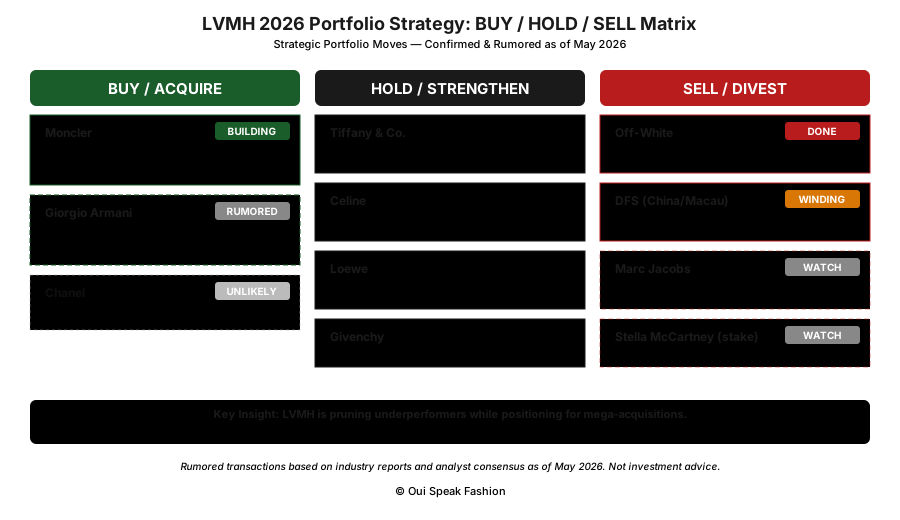
Portfolio Strategy in 2026: What LVMH Is Buying and Selling
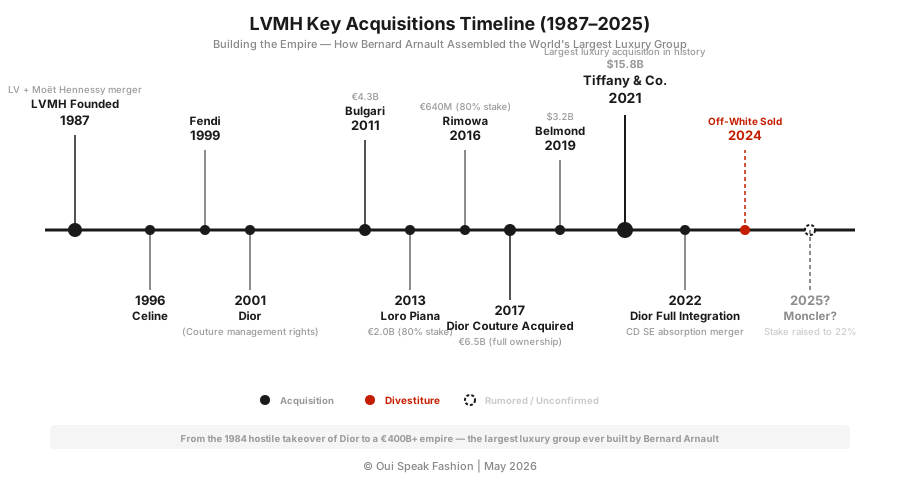
Under Bernard Arnault, LVMH has never been a static portfolio. The group continuously acquires brands it believes can be elevated and divests those that no longer fit its strategic vision.
Recent signals suggest an unprecedented period of portfolio refocusing. On the acquisition side, following the passing of Giorgio Armani in September 2025, the designer’s will name LVMH alongside L’Oréal and EssilorLuxottica as preferred buyers for an initial 15 percent stake, with a further 30–54.9 percent to follow within three to five years. As of early 2026, no firm bid has been announced. In the watch division, LVMH’s watchmaking unit acquired a minority stake in Swiss manufacturer La Joux-Perret.
On the divestiture side, LVMH has already completed several notable exits. Off-White was sold to brand management firm Bluestar Alliance in late 2024, and the group’s 49 percent stake in Stella McCartney was divested. The sale of DFS’s Greater China operations to China Tourism Group Duty Free was signed in January 2026. LVMH has also reportedly been exploring options for Marc Jacobs and its stake in Fenty Beauty. These moves suggest a strategy of sharpening the portfolio around brands with the strongest growth potential and heritage credentials.
What Makes LVMH Different: Key Takeaways
LVMH’s success is built on several principles that distinguish it from both luxury competitors and traditional conglomerates. The group maintains brand autonomy, allowing each maison to preserve its creative identity while benefiting from shared infrastructure. Its vertical integration strategy — controlling everything from raw materials to retail storefronts — protects both quality and margins. And its patient capital approach means LVMH can invest in brands for decades, nurturing heritage rather than demanding immediate returns.
For fashion professionals, investors, and enthusiasts alike, understanding the LVMH portfolio is essential to understanding the modern luxury landscape. The group’s decisions — which brands it acquires, which it sells, which creative directors it appoints — ripple through the entire industry.
Frequently Asked Questions
How many brands does LVMH own?
LVMH currently owns 75 brands (referred to as “maisons”) across six business divisions: Fashion & Leather Goods, Wines & Spirits, Perfumes & Cosmetics, Watches & Jewelry, Selective Retailing, and Other Activities.
What is the most valuable brand owned by LVMH?
Louis Vuitton is the most valuable brand in the LVMH portfolio and consistently ranks as the most valuable luxury brand in the world. It is estimated to generate over €20 billion in annual revenue.
Does LVMH own Chanel?
No. Chanel is privately owned by the Wertheimer family and is not part of LVMH, Kering, or any other luxury conglomerate. It remains one of the last major independent luxury houses.
Does LVMH own Hermès?
No. While LVMH previously held a significant stake in Hermès (acquired between 2001 and 2014), the group divested its position following legal disputes. Hermès remains controlled by the Hermès family and operates independently.
What is the difference between LVMH and Kering?
LVMH and Kering are both French luxury conglomerates, but they differ in scale and diversification. LVMH is significantly larger (€80+ billion in revenue vs. Kering’s approximately €18 billion) and operates across fashion, wines, jewelry, beauty, and retail. Kering is more concentrated in fashion, with Gucci as its dominant brand.
Is LVMH buying Giorgio Armani?
Following the passing of Giorgio Armani in September 2025, the designer’s will name LVMH, L’Oréal, and EssilorLuxottica as preferred buyers for an initial 15 percent stake, with a further 30–54.9 percent to follow within three to five years. As of May 2026, no firm bid has been publicly announced, and the succession process is ongoing.
Copyright © 2026 Oui Speak Fashion. All rights reserved.
Oui Speak Fashion (OSF)® is a New York-based Global Fashion, Beauty & Luxury Business Media Platform.